Oncology
9 articles in this category · Last updated May 22, 2026
Cancer care is where China's medical system has invested most heavily over the past two decades. Public oncology specialty hospitals like Sun Yat-sen Cancer Center, Tianjin Cancer Hospital, and Fudan Shanghai Cancer Center now operate at world-leading case volumes. Hematology programs at Peking University People's Hospital and Beijing 307 have shaped global practice — notably through the Beijing Protocol for haploidentical HSCT, which expanded transplant eligibility for patients without a matched sibling.
The articles in this category answer the questions international patients ask most often: Which surgical and transplant programs match Western centers? How does drug access (targeted therapy, immunotherapy, bispecifics) compare to the US and EU? What MDT pathway is appropriate for rare cancer, pediatric cases, or multiple primary tumors? Frontier therapies like CAR-T and proton/heavy-ion live in the separate Advanced Medicine category — but everything else in modern oncology is covered here.
Browse the curated reads below, grouped by the decision they help you make.
Surgical and transplant programs
Surgical volume drives surgical depth. China's leading liver transplant, hematopoietic stem cell transplant, and complex oncologic surgery centers operate at per-center case volumes 3-10x their Western counterparts. The guides below cover the surgical and transplant areas where this depth matters most clinically — from living-donor liver transplant to head-and-neck and gynecological cancer surgery.
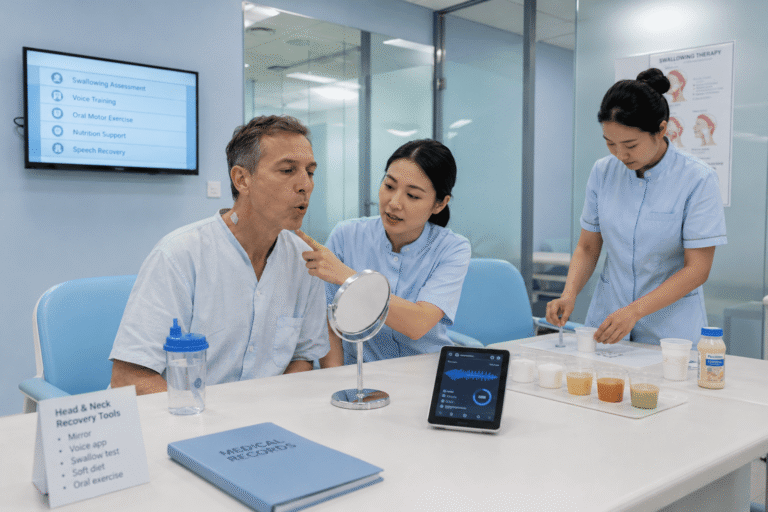
Head and Neck Cancer Treatment in China: Nasopharyngeal, Laryngeal, Oral-Maxillofacial, and Thyroid Cancer
9 minutes read China's head and neck cancer treatment has reached globally leading levels in multiple subspecialties: Nasopharyngeal cancer (NPC) — Sun Yat-sen University Cancer Center (SYSUCC) led...
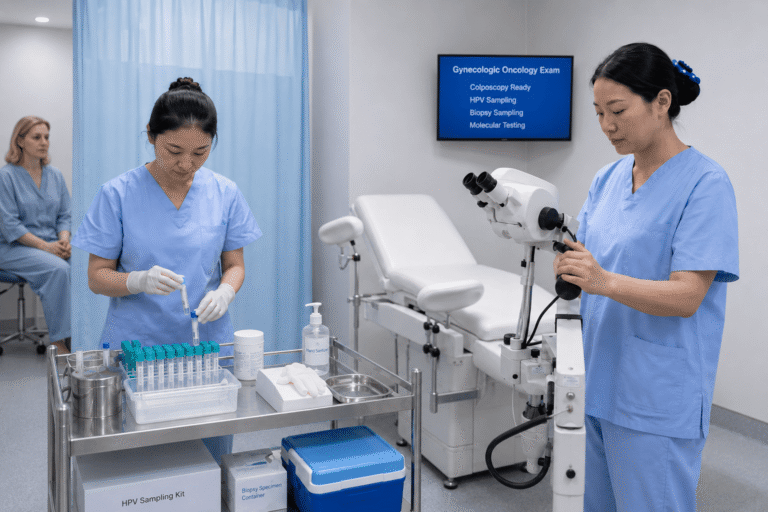
Gynecological Cancer Treatment in China: Cervical, Endometrial, Ovarian, and Gestational Trophoblastic Neoplasms
9 minutes read China is the country with the largest cervical cancer burden globally — accounting for 23% of global cases [1]. But on gynecological cancer treatment capability,...

Pediatric Oncology in China: Leading Centers, CAR-T, Liver Transplant, and Comparison with the West
10 minutes read Pediatric oncology has been among China's most rapidly advancing fields in the past 20 years — the National Children's Medical Center dual-center system (Beijing Children's...
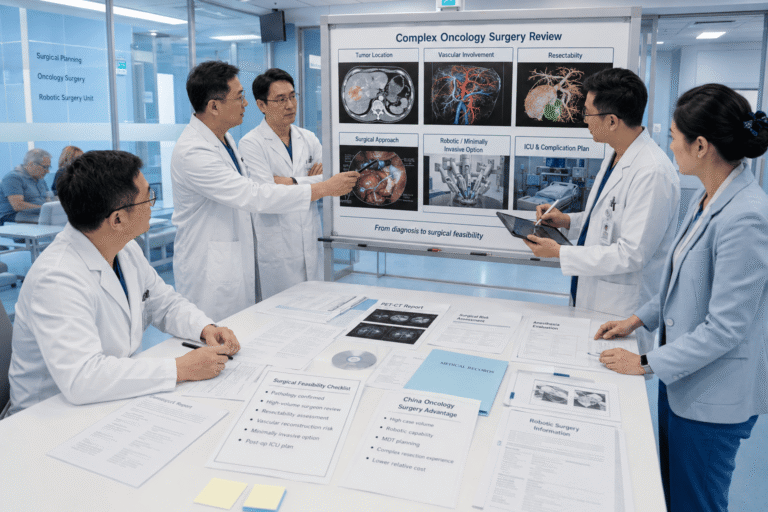
Complex Oncology Surgery in China: World's Largest Case Volumes, Top Centers, and Comparison with the West
10 minutes read Complex oncology surgery is one of the core scenarios that brings international patients to China — China holds the world's largest case volumes for esophageal...

Bone Marrow / Hematopoietic Stem Cell Transplant in China: The Beijing Protocol, Haploidentical Transplant, and Comparison with the West
11 minutes read China is the only country in the world with HSCT volume on par with the United States — performing 21,714 hematopoietic stem cell transplants in...
Drug therapy and refractory disease
Targeted therapy, immunotherapy, and the bispecific/sequential strategies for relapsed and refractory disease — China's drug landscape now mirrors the US/EU closely, but at materially lower cost. These guides cover what's available, how access works for international patients, and the sequential treatment strategies for the hardest cases.
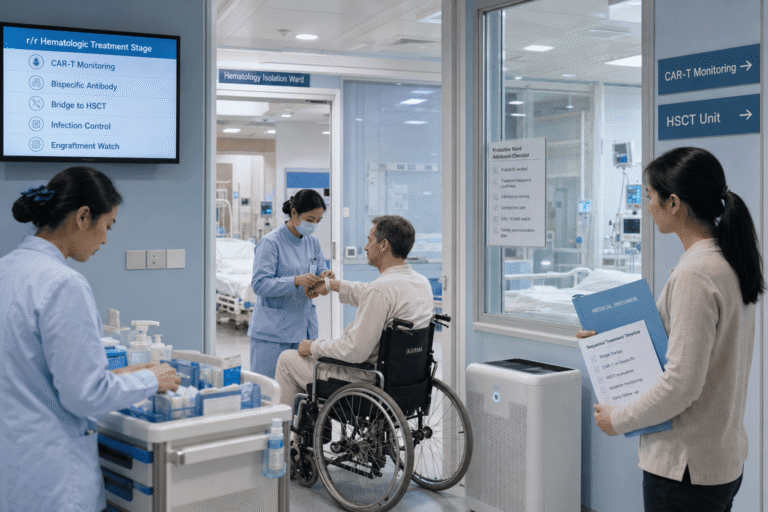
Relapsed and Refractory Hematologic Malignancies in China: CAR-T, Bispecifics, Haploidentical HSCT, and Sequential Treatment Strategies
10 minutes read Relapsed and refractory (r/r) hematologic malignancies — hematologic cancers that have progressed despite first-line treatment or remain uncontrolled after second or third-line therapy — have...

Targeted Therapy and Immunotherapy in China: Drug Availability, US Comparison, and International Patient Access
10 minutes read Over the past decade, China has emerged as one of the world's primary developers of oncology targeted and immunotherapy drugs — Chinese-developed PD-1/PD-L1 inhibitors, third-generation...
Special populations and complex cases
Rare cancers, pediatric oncology, and patients with multiple primary cancers fall outside standard treatment algorithms — these are exactly the situations where China's MDT pathway and high-volume pathology infrastructure deliver value. The guides below cover the case types where second-opinion review and multidisciplinary input matter most.
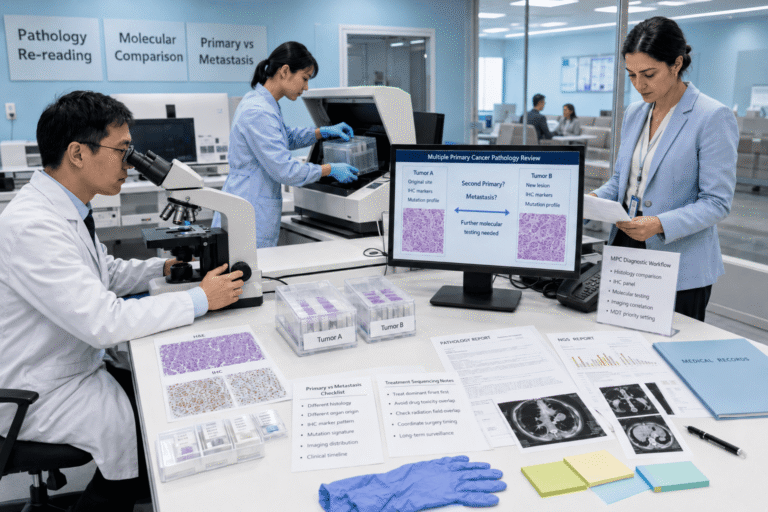
Managing Multiple Primary Cancers: China's Pathology + MDT-Driven Approach for Complex Cases
8 minutes read Multiple Primary Cancers (MPC) — the occurrence of two or more independent primary tumors in the same patient — is among the most complex situations...

Rare Cancer Diagnosis and Treatment in China: Diagnostic Capability, Approved Therapies, and the MDT Pathway
10 minutes read Rare cancers (such as sarcomas, neuroendocrine tumors, GIST, mesothelioma, thymoma, and rare pediatric cancers) are among the most difficult cancer categories to diagnose and treat...
Finished a few Oncology articles and still unsure which path fits your case? Cancer decisions are the hardest decisions cross-border patients face.
Email us your diagnosis, prior treatment, country, and insurance situation. Within 1-2 business days we reply with the next concrete step — case-brief preparation, remote MDT, or in-China execution. Free, no commitment.
— MedCareInChina Editorial Team