Reading time: 11 minutes
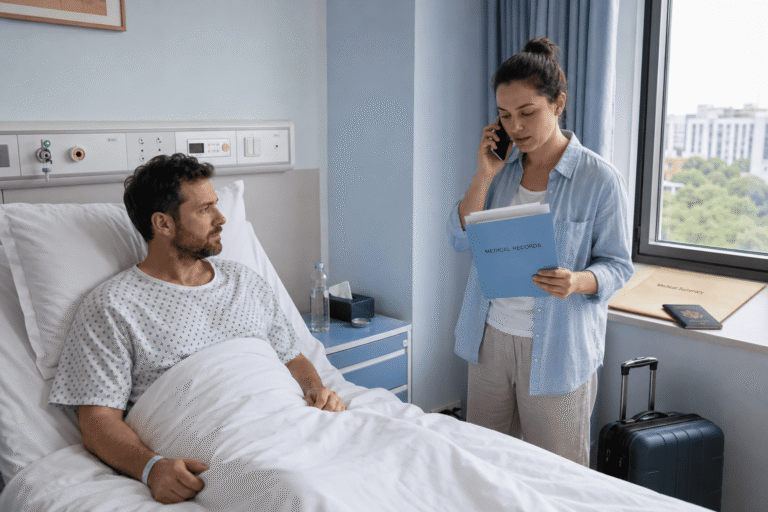
Many international patients equate “discharged” with “ready to go home.” For transplant, CAR-T, and proton/heavy-ion therapy, discharge is the middle of treatment, not the end. The four to twelve weeks after discharge are the highest-risk window for complications, the lowest point of immune function, and the period of most frequent medication adjustment — and the patient typically cannot fly home yet, but needs to stay in China for observation. This is the most easily missed article in the Travel & Logistics series, because it means staying in China one to three months longer than originally planned. This article works through the medical, accommodation, dietary, psychological, insurance, and timing aspects of the recovery period.
Which Treatments Require Staying for Recovery
| Treatment | Recommended in-China stay after discharge | Main reason |
|---|---|---|
| Allogeneic stem cell transplant | +60–100 days | GVHD high-risk window, deeply suppressed immunity |
| Autologous stem cell transplant | +30–60 days | Infection risk, medication adjustment |
| CAR-T therapy | +30–60 days | Delayed CRS / ICANS risk |
| Liver transplant | +30–60 days | Rejection, infection, biliary complications |
| Kidney transplant | +30–45 days | Rejection monitoring, medication adjustment |
| Proton / heavy-ion therapy (CNS / head and neck) | +14–30 days | Acute radiation effects, edema |
| Complex cardiac surgery | +14–30 days | Anticoagulation adjustment, wound healing |
| Complex cancer surgery | +14–30 days | Complication monitoring |
Medical Care During Recovery
Outpatient follow-up frequency:
- Transplant / CAR-T: typically 2–3 visits per week in the first 4 weeks, then weekly for weeks 4–8
- Liver and kidney transplant: 1–2 visits per week in the first 4 weeks
- Proton therapy / major surgery: 1 visit per week for the first 2 weeks
Core monitoring panel:
- Complete blood count, liver and kidney function, electrolytes
- Transplant patients: chimerism, CMV, EBV, additional virologic screening
- CAR-T patients: B-cell count, immunoglobulins
- Transplant / CAR-T: periodic imaging (CT, MRI)
Medication adjustment:
- Immunosuppressants (transplant) and immune support (CAR-T) require frequent therapeutic drug monitoring
- Any infection may require antibiotic / antiviral / antifungal adjustment
- Do not switch physicians or hospitals during recovery — continuity of the treating team is the single most important factor
Accommodation During Recovery
Cross-reference Article #46, with specific notes for the recovery period:
1. Closer is better. Outpatient follow-up is frequent, and emergency return to the hospital can be needed at any time. Aim for within a 15-minute walk of the treating hospital.
2. Prefer a serviced apartment over a hotel.
Why:
- Kitchen access: enables low-microbial or sterile dietary preparation
- Private bathroom: infection control
- Separated living and sleeping areas: caregiver does not disturb patient rest
- Long-stay discounts: 3-month accommodation can be 30–40% cheaper
3. Indoor air quality.
- Prefer apartments with fresh-air ventilation systems
- Carry N95 masks (transplant / CAR-T patients must wear them outside)
- Stay strictly indoors on heavy-smog days
4. Floor selection.
- Mid-to-low floor (avoid high-floor wind exposure and HVAC dryness)
- Elevator access (avoid stairs)
Diet During Recovery
Cross-reference Article #49, with emphasis:
- For the first 1–2 months after transplant or CAR-T discharge: physicians typically still require a low-microbial diet — avoid raw foods, undercooked meat, unpasteurized dairy, street food, takeout
- A self-prepared kitchen, with the patient or caregiver preparing meals, is strongly recommended
- Fruits must be peeled, vegetables thoroughly cooked
- Drink bottled or boiled water (avoid direct tap)
- Avoid enclosed restaurant settings (infection risk)
Activity and Social Contact During Recovery
Physical activity:
- Long-distance travel not recommended (even domestically within China)
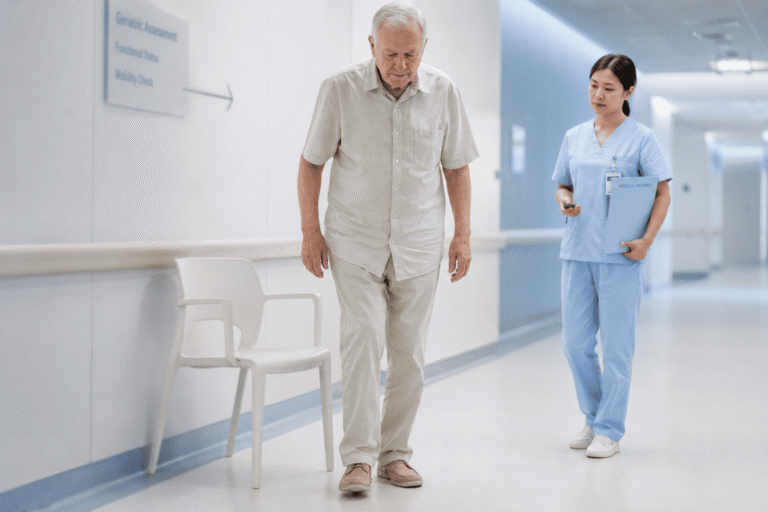
- Walking is the safest form of exercise, up to 30 minutes daily
- Avoid crowded venues (metro peaks, shopping malls, theaters)
- Transplant and CAR-T patients should avoid contact with children for the first 60 days (vaccinated contacts excepted)
Social contact:
- Video calls are the primary form of contact
- Visitors must be healthy, masked, and hand-washed
- Frequency of remote contact with home family and friends need not decrease — this is a key source of emotional stability
Psychological and Emotional Aspects of Recovery
The single most underappreciated challenge of the recovery period is psychological. The intensity of active treatment is past, but “still can’t go home, still not fully free, still waiting for results” produces low mood, anxiety, and irritability. This is normal and should be actively addressed:
- Maintain a routine — fixed wake time, fixed walk, fixed reading time
- Set short-term goals — finish a book this week, video with three friends from home
- Engage a counsellor when needed — many international counselling platforms offer remote sessions
- Tell the attending physician — psychological state affects physical recovery, and the attending physician can typically arrange a consult-liaison psychiatric referral
Things You or Your Family Must Handle During Recovery
Recovery surfaces administrative tasks that are not part of the medical care. None of the following are within MedCareInChina’s service scope, and need to be handled by you or your accompanying family directly:
- Visa extension or residence permit renewal — visit your city’s Public Security Bureau exit-entry administration office. Prepare 7–10 days in advance with passport, hospital ongoing-treatment certificate, accommodation registration, and recent photographs
- Long-term apartment lease renewal or upgrade — directly contact your landlord or apartment front desk. Negotiate renewal two weeks before lease end
- Insurance claim submission back home — handled by you or your insurance broker per Article #40
- Coordination with home-country physician for ongoing care — handled by you or your home-country family physician; the Chinese attending physician can issue an English follow-up recommendation letter when you request it
- Return flight booking and Fit-to-fly certificate — flight booked by you; Fit-to-fly certificate requested from the attending physician directly before discharge (most hospital international departments can issue this)
Insurance and Documents During Recovery
Insurance:
- Most international policies cover outpatient follow-up during the recovery period — but you must verify whether the annual limit has been exhausted
- Some policies have a “recovery support” rider (family travel, recovery equipment)
- Extended medication periods may generate additional cost — budget accordingly
Documents:
- During the recovery period, request the English Discharge Summary and follow-up treatment recommendation — you submit the request to the hospital international department
- Begin preparing your medication English-name list with dosages and carry letter (see Article #52)
Deciding When You Can Go Home — Four Criteria
Going home is not a calendar question; it is a four-criterion question:
- Key indicators stable (blood counts, hepatic and renal function, infection markers)
- Major complication windows have passed (GVHD, CRS, acute rejection)
- The home country can continue the next phase (medications available, physician willing to take handoff)
- The airline medical clearance passes (some airlines require a Fit-to-fly certificate for post-treatment patients)
Recovery in China vs Early Return Home — Trade-offs
If a patient insists on returning home early, the costs to be clear about:
- If a complication occurs in flight or after landing, you are far from the treating team
- Some investigations or medications may be unavailable or unfamiliar at home
- International insurance may decline coverage for “early discharge” complications
- Long-haul flight itself is a burden on a post-treatment body
Exception: if a top home-country hospital or physician has formally accepted the patient and the treatment team handoff is complete, early return can be appropriate.
What MedCareInChina Can and Cannot Do During Recovery
Our two products are Remote Consultation and In-China Accompanied Care. During the recovery period:
- If you have engaged In-China Accompanied Care, the chaperone continues to accompany you to outpatient follow-up visits and serves as a bilingual communication channel. This is a natural extension of the accompanied care service
- If you have only engaged Remote Consultation and later wish to maintain remote contact with the attending Chinese physician after returning home, you can engage Remote Consultation again (Single Expert Consultation at USD 800 per session, subject to the physician’s availability) for remote review of your follow-up results
What we do not do:
- Visa extension or residence permit renewal
- Long-term apartment lease renewal or change
- 24-hour emergency response — call 120 for emergency services, or your hospital’s international department on-call line
- Issuing or coordinating Fit-to-fly certificates — request directly from the attending physician
- Coordination with home-country physicians for next-phase care
- Any form of insurance claim handling
We can offer informational guidance on where to go and whom to contact for each of these items. We do not perform them on your behalf.
Action Checklist
- Plan total in-country time as “treatment + recovery” (not treatment alone)
- On discharge day, confirm follow-up frequency and total recovery duration
- Choose long-stay accommodation with a kitchen
- Strictly maintain low-microbial diet; wear N95 outside
- Monitor your psychological state and seek professional support when needed
- Decide on home travel by the four criteria, not the calendar
- Request a Fit-to-fly certificate from the attending physician before discharge
- Handle visa extension or residence permit renewal yourself at the local Public Security Bureau exit-entry office
Sources
[1] Chinese Society of Hematology — Post-HSCT management consensus: https://www.csh.org.cn/ [2] National Marrow Donor Program / Be The Match — Post-transplant care guidelines (international reference) [3] CAR-T cell therapy post-treatment monitoring — reviews in Lancet Oncology and NEJM [4] Chinese Society of Organ Transplantation — Long-term management of transplant recipients: https://www.csot.org.cn/ [5] IATA Medical Manual — Fit to fly guidance: https://www.iata.org/ [6] National Immigration Administration of PRC — In-China residence permit renewal: https://www.nia.gov.cn/