Reading time: 11 minutes
Paediatric cross-border care is materially more complex than adult care — different disease spectrum, different anaesthesia risk, different psychological support needs, and additional layers of complexity around parental visas, school disruption, and long-term rehabilitation. Although China’s overall paediatric workforce per capita remains lower than in many developed countries [1], the leading children’s specialty hospitals — Beijing Children’s Hospital, Shanghai Children’s Medical Center, Children’s Hospital of Fudan University, and Guangzhou Women and Children’s Medical Center — operate at internationally comparable levels in congenital heart surgery, paediatric haematology and oncology, cleft lip and palate, and rare genetic disease [2]. This article addresses honestly: which paediatric conditions are appropriate for cross-border care in China, parental visa and accompaniment arrangements, typical workflow, typical costs, and home-country handoff.
1. Typical Scenarios for Paediatric Cross-Border Care
Reasonable to consider:
- Congenital heart surgery (VSD, ASD, PDA, TOF, complex single-ventricle physiology)
- Paediatric leukaemia / lymphoma / solid tumours (ALL, neuroblastoma, medulloblastoma, others)
- Paediatric haematopoietic stem cell transplantation (including thalassaemia, SCID)
- Cleft lip and palate repair (primary or secondary, with speech therapy planning)
- Paediatric otology (cochlear implantation for severe hearing loss)
- Paediatric genetic and metabolic disease diagnosis
- Paediatric scoliosis correction (see Article #58)
- Home country has insufficient capacity or excessive waiting times
Not appropriate or to be approached with caution:
- Acute critical illness — must be stabilised locally; do not travel long distance
- Stable chronic disease follow-up — better managed at home
- Newborns under 28 days — generally not recommended for cross-border travel
- Premature or complex perinatal cases — home-country NICU is the priority
2. Children’s Specialty Hospitals to Consider
National Children’s Medical Centres and Regional Children’s Medical Centres [2]:
| Hospital | City |
|---|---|
| National Children’s Medical Center (Beijing) — Beijing Children’s Hospital, Capital Medical University | Beijing |
| National Children’s Medical Center (Shanghai) — Children’s Hospital of Fudan University | Shanghai |
| National Children’s Medical Center (Shanghai) — Shanghai Children’s Medical Center, Shanghai Jiao Tong University School of Medicine | Shanghai |
| National Regional Children’s Medical Center — Guangzhou Women and Children’s Medical Center | Guangzhou |
| National Regional Children’s Medical Center — Children’s Hospital of Zhejiang University School of Medicine | Hangzhou |
| National Regional Children’s Medical Center — Children’s Hospital of Chongqing Medical University | Chongqing |
| National Regional Children’s Medical Center — Children’s Hospital of Xi’an Jiaotong University | Xi’an |
Particularly strong in paediatric cardiac surgery:
- Fuwai Hospital, Department of Pediatric Cardiac Surgery
- Shanghai Children’s Medical Center, Cardiothoracic Surgery
- Guangdong Provincial People’s Hospital, Pediatric Cardiac Surgery
- Children’s Hospital of Fudan University, Cardiovascular Center
Particularly strong in paediatric haematology and oncology:
- Beijing Children’s Hospital, Haematology and Oncology Center
- Shanghai Children’s Medical Center, Haematology and Oncology
- Institute of Hematology and Blood Diseases Hospital, Chinese Academy of Medical Sciences, Pediatric Hematology Center (Tianjin)
- Children’s Hospital of Soochow University, Haematology and Oncology
3. Parental Visa and Accompaniment (Practical)
Per Articles #45 and #48:
- The child’s S2 visa: applied for in the same way as for an adult, requiring the hospital’s medical invitation letter
- Parental S2 visa: for accompanied care
- Expected treatment over 180 days: parents shift to S1 + residence permit
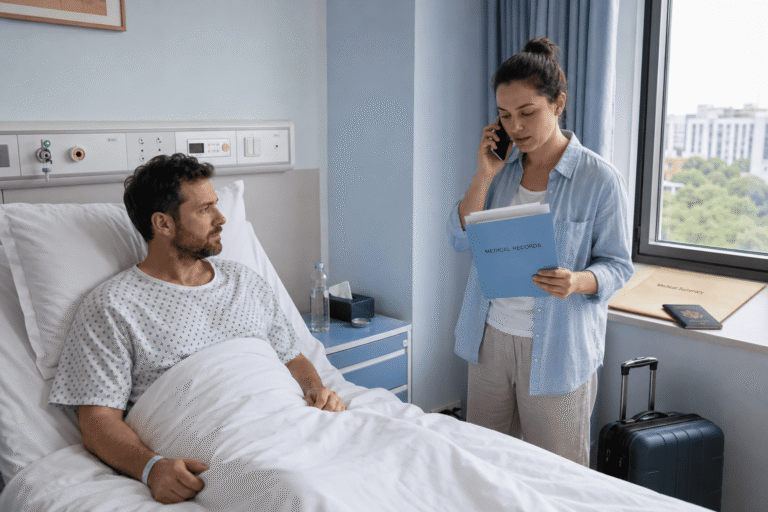
- For minors: at least one legal guardian should be present throughout
- Schooling: for long-term treatment of school-age children, confirm a remote learning arrangement with the home-country school
4. Special Considerations for Paediatric Cross-Border Care
Anaesthesia and sedation:
- Paediatric anaesthesia requires paediatric-anaesthesia subspecialists (routine at leading Chinese children’s hospitals)
- Examinations, imaging, and endoscopy under sedation are more frequent than in adults
- Pre-anaesthetic fasting is strictly enforced by age band
Psychological support:
- Leading Chinese children’s hospitals have child life specialists or medical social workers, particularly in oncology
- Parents need to be prepared for sustained psychological demand
- Video contact with home-country family and friends, plus cultural adaptation support, matter a great deal
Diet:
- Children’s taste preferences and religious dietary needs are operationally harder in China than for adults
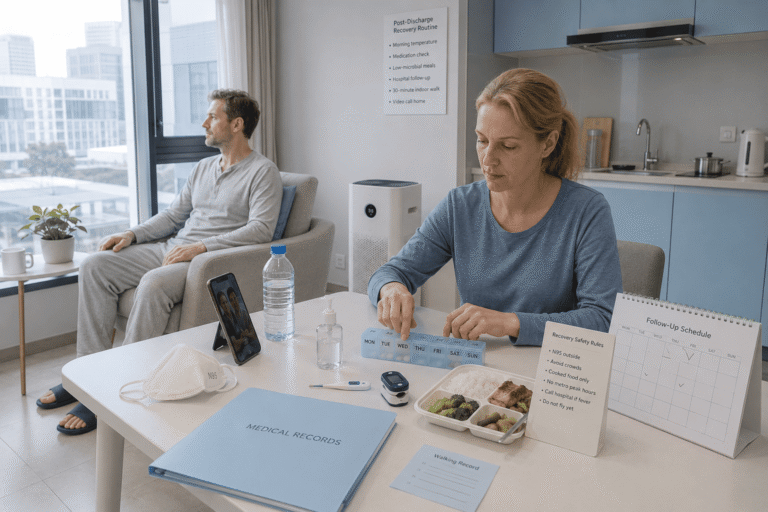
- Prioritise serviced apartments with kitchens (see Articles #46 and #49)
Vaccinations:
- China’s immunisation schedule differs slightly from many home countries
- Confirm the home-country baseline immunisations are complete before departure
- Routine in-China vaccinations during treatment are at the parents’ discretion in consultation with the treating team
5. Typical Process (Using Congenital Heart Repair as an Example)
- Remote Consultation (USD 800): cardiac surgery, with cardiology where needed, to assess surgical indication
- Pre-departure preparation: echocardiogram, CTA, cardiac catheterisation report (if any), growth and development records
- Arrival and preoperative evaluation (3–5 days): catheterisation / repeat echo, anaesthesia assessment
- Surgery day: 2–6 hours depending on complexity
- Post-op ICU: 1–3 days
- General ward: 5–10 days
- Discharge and early in-China follow-up: 3–7 days
- Total in-China duration: 3–4 weeks
6. Typical Costs (USD,)
Congenital heart repair (inpatient stay, anaesthesia, ICU included):
| Procedure | Cost |
|---|---|
| Atrial septal defect (ASD) device closure | 8,000–14,000 |
| Ventricular septal defect (VSD) device closure | 9,000–15,000 |
| ASD / VSD surgical repair | 12,000–22,000 |
| Tetralogy of Fallot (TOF) total repair | 22,000–38,000 |
| Transposition of great arteries (TGA) correction | 28,000–50,000 |
| Complex single-ventricle Fontan sequence | 25,000–45,000 per stage |
Paediatric haematology and oncology:
| Treatment | Cost |
|---|---|
| Paediatric ALL standard chemotherapy (full course, inpatient included) | 40,000–80,000 |
| Paediatric AML chemotherapy (full course) | 60,000–120,000 |
| Neuroblastoma multimodal treatment | 60,000–120,000 |
| Paediatric haematopoietic stem cell transplant (HLA-matched sibling) | 60,000–110,000 |
| Paediatric CAR-T (within Chinese approved indications) | 160,000–220,000 |
Cleft lip and palate:
- Isolated lip repair: USD 2,500–5,500
- Combined lip and palate repair (multi-stage): total USD 6,500–15,000
Cochlear implant:
- Domestic cochlear implant (with surgery): USD 12,000–22,000
- Imported cochlear implant (with surgery): USD 25,000–45,000
US reference: paediatric cardiac surgery typically USD 100,000–300,000; paediatric HSCT USD 500,000+; CAR-T USD 400,000+ [3].
7. Handing Care Back Home
- Post paediatric cardiac surgery: long-term paediatric cardiology follow-up at home (echo and ECG)
- Paediatric oncology: maintenance therapy and long-term follow-up at home
- Vaccination catch-up: post-transplant children require re-immunisation from scratch
- Growth and development: ongoing monitoring by paediatrics or paediatric endocrinology at home
- Psychological recovery: home-country mental health support recommended
8. What MedCareInChina Can and Cannot Do on the Paediatric Pathway
Our two products are Remote Consultation and In-China Accompanied Care.
- Remote Consultation: USD 800 single-expert consultation. Remote review with paediatric cardiac surgery, oncology, transplant, or rare-disease specialists
- In-China Accompanied Care: full hospital accompaniment with translation through evaluation, inpatient stay, and rehabilitation. For paediatric patients, we strongly recommend continuous chaperone presence throughout
What we do not do: legal guardianship handling, cross-border school enrolment, home-country NICU transfer.
9. Action Checklist
- Bring the child’s complete medical history, imaging, and growth/development records
- Engage a remote consultation with both parents present
- Apply for parental S2 or S1 visas (per Article #45)
- Plan remote learning
- Choose a serviced apartment with kitchen and close to the hospital
- Plan 14–60+ days in China depending on the condition
- Long-term paediatric specialty follow-up at home after return
Sources
[1] National Health Commission of China — Annual reports on paediatric workforce capacity [2] National Health Commission of China — List of designated National Children’s Medical Centres and Regional Children’s Medical Centres: http://www.nhc.gov.cn/ [3] American Academy of Pediatrics — Pediatric care references: https://www.aap.org/ [4] American Heart Association — Congenital heart disease guidelines: https://www.heart.org/ [5] Children’s Oncology Group — Pediatric oncology references: https://www.childrensoncologygroup.org/